
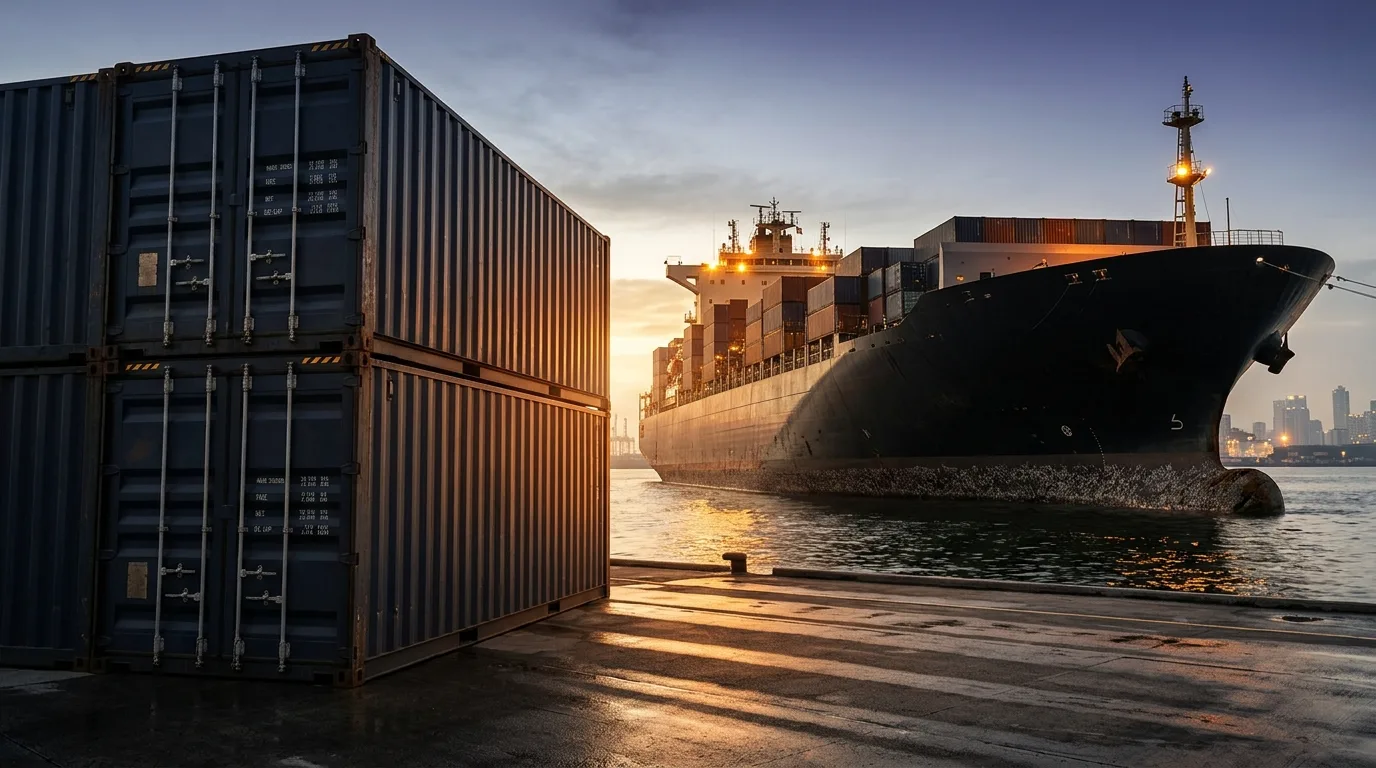
How Long Does International Moving Actually Take? A Route-by-Route Breakdown
One of the first questions anyone asks when planning a cross-border move is: how long does international moving actually take? The answer depends heavily on where you're going, how you're shipping, and what happens at customs — and the range is wider than most people expect. A move to Dubai might be wrapped up in two weeks. The same volume of household goods heading to Canada could take two to three months. This guide breaks down realistic timelines route by route, so you can plan your move — and your life — around a schedule that's grounded in reality.
Why International Moving Timelines Vary So Much
Most people planning an international move go looking for a single, simple answer to the timeline question. What they find instead is a wide range — and that range exists for very good reasons. Unlike domestic moves, where a truck drives from A to B, international shipping involves multiple handoffs: a local crew packs your goods, a freight forwarder collects them, a vessel or aircraft carries them across borders, customs authorities in the destination country inspect and clear them, and then a local delivery team gets them to your door. Each of those stages has its own timeline, and delays at any one of them compound.
The four biggest variables that determine how long your move takes are: shipping mode (sea vs. air freight), destination country (transit distance and port efficiency), customs clearance speed (how well-prepared your paperwork is), and how early you book (whether your goods go into a shared container or have to wait for one to fill).

Understanding these variables upfront helps you set realistic expectations, choose the right shipping mode, and give yourself enough runway to avoid expensive last-minute decisions. With that context in place, let's look at what the timelines actually look like on the routes iMove Global handles most frequently.
How Long Does International Moving Take? Timelines by Route
The table below gives you realistic door-to-door estimates for the most common routes iMove Global operates. These figures include packing and collection at origin, sea or air transit time, customs clearance at destination, and local delivery. They assume paperwork is in order and no unusual inspection is triggered at the border — we'll cover what can extend these timelines in a later section.
Sea freight times shown are port-to-port transit only. Add 5–10 days for origin collection/packing and 5–14 days for destination customs + delivery to get your full door-to-door window. Air freight total already includes typical customs clearance (1–3 days) and local delivery at destination.
| Route (from India) | Sea Freight (transit) | Sea — Door-to-Door | Air Freight | Air — Door-to-Door | Recommended Mode |
|---|---|---|---|---|---|
| India → UAE (Dubai / Abu Dhabi) | 7–14 days | 3–5 weeks | 2–4 days | 1–2 weeks | Sea (most shipments) |
| India → Singapore | 7–12 days | 3–4 weeks | 3–5 days | 1–2 weeks | Sea (LCL) or Air (urgent) |
| India → United Kingdom | 25–35 days | 7–10 weeks | 5–7 days | 2–3 weeks | Sea (full household) |
| India → Australia | 18–28 days | 6–9 weeks | 5–8 days | 2–4 weeks | Sea — note strict biosecurity |
| India → Canada | 28–42 days | 8–12 weeks | 7–10 days | 3–4 weeks | Sea (full household) |
| India → USA | 28–45 days | 8–14 weeks | 7–12 days | 3–5 weeks | Sea (FCL for families) |
| India → Germany / Europe | 22–32 days | 7–10 weeks | 5–8 days | 2–3 weeks | Sea (full household) |
| India → New Zealand | 25–35 days | 8–11 weeks | 8–12 days | 3–5 weeks | Sea — allow extra for MPI clearance |
All estimates assume correct documentation and no physical inspection at destination customs. LCL = Less than Container Load. FCL = Full Container Load.
India to UAE: The Fastest Full-Scale Route
The India–UAE corridor is the most frequently used route iMove Global handles, and it's also the quickest for sea freight. With direct sailings from Mumbai, Chennai, and JNPT to Jebel Ali, you're looking at 7–14 days on the water. UAE customs for household goods is generally efficient — provided your import permit (NOC from GDRFA) and packing inventory are submitted in advance. Door-to-door, most families moving from India to Dubai are settled within three to five weeks of their goods being collected. See our dedicated India to UAE international moving page for service details and pricing.
India to UK and Europe: Plan for 10 Weeks Minimum
The distance and the transshipment hubs involved mean sea freight to the UK and continental Europe takes significantly longer. Most shipments route through Felixstowe, Southampton, or Rotterdam, with transit times of 25–35 days. Add UK customs clearance (typically 3–7 days for household effects with full documentation) and local delivery, and you're realistically looking at seven to ten weeks door-to-door. If you have a firm move-in date, work backwards and book your collection at least ten weeks ahead.
India to Canada and USA: Allow Up to 14 Weeks
Transatlantic and transpacific routes from India carry the longest sea freight timelines — 28–45 days port-to-port, with door-to-door windows stretching to 8–14 weeks when you include customs and local delivery. Moving from India to Canada typically involves routing through Nhava Sheva (Mumbai) or Chennai to ports at Vancouver, Montreal, or Halifax, while India to USA shipments commonly transit through Los Angeles, New York, or Houston. Both corridors are subject to CBP and CBSA documentation requirements — allow extra time if your shipment includes high-value items or electronics that may be flagged for inspection.
India to Australia and New Zealand: Biosecurity Adds Time
Australia and New Zealand have some of the world's most stringent biosecurity requirements, and this affects moving timelines in a very specific way. All wooden furniture and items that have had soil contact must be treated before or after arrival — and the Australian Border Force reserves the right to hold shipments for physical inspection. Even with clean documentation, allow six to nine weeks door-to-door for Australia, and eight to eleven weeks for New Zealand, where the Ministry for Primary Industries (MPI) clearance process adds an extra layer.

Need an accurate timeline for your specific route and shipment size? Our team can give you a precise window as part of a free quote. Explore our international moving service to get started.
View Service DetailsSea Freight vs. Air Freight: The Time Trade-Off
Every international moving customer eventually faces the sea-versus-air question. The answer involves more than just transit time — it comes down to volume, cost, and how urgently you need your things at the other end.
Sea Freight: Slower, but Right for Most Households
Sea freight is the default for full household moves because it's the only cost-effective way to ship large volumes over long distances. A standard two-bedroom apartment generates roughly 10–15 cubic metres of goods — far too much to air freight economically. Sea freight transit times range from 7 days (India to Singapore) to 45 days (India to the US West Coast). Door-to-door, you're typically looking at 4–12 weeks depending on the route. The main risk with sea freight is that timelines stretch when vessels are delayed or port congestion occurs — something that affects some corridors more than others.
Air Freight: Fast, but Only Practical for Small Volumes
Air freight is typically four to eight times more expensive per cubic metre than sea freight. For most families, this means air freight is only practical for a priority shipment — the items you need at your destination within days of arrival: medications, laptops, important documents, children's essentials, and a week's worth of clothing. A priority air consignment of 50–100kg can be cleared and delivered within five to ten days on most routes. Some families use a hybrid approach: air freight a priority box ahead, and sea freight the rest.

The most common mistake families make is assuming sea freight timelines are comparable to air. On a long-haul route like India to Canada, the gap between the two can be 8 to 10 weeks — a period you'll need to plan accommodation and essentials for.
iMove Global Operations Team
LCL vs. FCL: Another Timeline Variable
Within sea freight, you'll also face a choice between LCL (Less than Container Load) and FCL (Full Container Load). With LCL, your goods share a container with other shipments — which means your consignment waits at a consolidation warehouse until the container is full before sailing. This can add one to two weeks to your timeline. With FCL, you fill an entire container and it sails as soon as your goods are loaded. FCL is faster and less handling-intensive, but only makes sense economically if you have enough volume to justify a 20-foot or 40-foot container.
For India to UAE relocations, iMove Global handles both LCL and FCL depending on household size — and we'll advise which is the better fit during your quote consultation. For a deeper breakdown of the cost and speed trade-offs across all routes, see our guide to sea freight vs. air freight for international moves.
What Causes Delays — and How to Avoid Them
Even on a well-run move with an experienced freight forwarder, delays happen. Knowing where they typically come from lets you take steps to reduce the risk. The good news is that the most common causes of international moving delays are almost entirely within your control before the shipment even leaves your home.
April–June and October–December are peak moving seasons on India-origin routes, coinciding with school year transitions and corporate relocation cycles. Container availability tightens and port handling slows. If your move falls in these windows, book 12 weeks in advance rather than the standard 8.
Below are the five most common delay causes iMove Global sees across its routes, along with practical steps to avoid each:
Missing packing lists, incorrect HS codes on inventory, or absent import permits are the single biggest cause of customs holds. The fix is simple: provide your freight forwarder with a detailed room-by-room inventory at least two weeks before collection, and confirm which destination-specific permits your move requires (e.g., UAE GDRFA NOC, Australian AQIS clearance forms). Your moving company should provide you with a document checklist — if they don't, that's a red flag.
Every destination country has its own list of prohibited household items — this ranges from certain food products and plants (Australia, NZ) to religious materials (some Gulf countries) and specific chemicals in cleaning products. A single prohibited item can trigger a full hold and physical inspection of your entire container. Ask your mover for the destination-specific prohibited items list before you start packing.
Some delays are simply outside your control. Major ports — including Jebel Ali (Dubai), Felixstowe (UK), and Port Botany (Sydney) — experience congestion during peak seasons or following major shipping disruptions. LCL shipments are more vulnerable to this than FCL, since your goods may be consolidated and deconsolidated at multiple hubs. When booking, ask your mover about the current state of congestion on your specific corridor.
In some countries, import duties and port handling fees must be settled before goods are released. If you're not prepared for these charges — or if they arrive by email while you're still mid-relocation — your container can sit at the port incurring demurrage fees. Confirm all destination charges in advance with your moving company, and keep a payment method accessible during the transit window.
Booking your move less than four weeks before departure almost always results in either a rush premium, a missed sailing, or both. LCL shipments in particular need consolidation time before a vessel departure. For FCL, container availability at short notice can be limited in peak periods. The safest approach: book your move the moment you have a confirmed visa or relocation start date — not when you have a confirmed flight.
How iMove Global Keeps Your Move on Track
A reliable timeline isn't something that just happens — it's the result of a coordinated process that starts weeks before your goods are packed. iMove Global's approach is built around three things that directly affect how long your move takes: early documentation management, route-specific customs expertise, and proactive milestone tracking throughout transit.
Documentation Pre-Clearance
Before we collect a single box, our operations team works with you to prepare and verify every document required for your destination: packing inventory, import permits, certificates of origin where required, and any specialist clearances (AQIS, MPI, GDRFA). Getting this right before the shipment departs is the single most effective way to prevent a customs hold at the other end.
Route-Specific Expertise
Not all international movers handle all routes with equal depth. iMove Global's core network covers India, UAE, Singapore, UK, Australia, Canada, and the USA — the routes we move households on every week. This means we have current, practical knowledge of which ports are congested, which carriers are reliable on which corridors right now, and what destination customs authorities are scrutinising at any given time. That ground-level knowledge translates directly into more accurate timelines and fewer surprises.
Transit Tracking and Communication
Once your goods are at sea or in the air, uncertainty is the hardest part. iMove Global provides milestone notifications at each stage — goods collected, container loaded, vessel departed, arrived at destination port, customs cleared, out for delivery. You always know where your household is, and you have a dedicated point of contact if anything changes. Our international moving service includes full-journey tracking as standard, not as an add-on.

Plan the Timeline Before You Plan the Packing
Understanding how long international moving takes isn't just useful information — it's the foundation of a well-run relocation. A move that's booked without a clear picture of transit times, customs requirements, and lead time needs tends to produce the kind of stress that follows you to your new country. The reverse is also true: families who start the logistics conversation early, who understand the sea vs. air trade-off on their route, and who have a freight forwarder handling documentation from the outset rarely encounter the delays that catch others off guard. If you're still mapping out the full process, our step-by-step international moving process guide covers every stage from initial quote to delivery.
The single biggest thing you can do to keep your international move on schedule is to start planning earlier than feels necessary. On most routes from India, eight to twelve weeks of lead time gives your moving company the space to secure good container rates, handle documentation pre-clearance, and absorb any minor disruptions without affecting your delivery window.
Key Takeaways
- Sea freight door-to-door ranges from 3 weeks (India–UAE) to 14 weeks (India–USA) depending on route, mode, and customs efficiency.
- Air freight is 4–8× more expensive than sea freight — practical only for priority items (50–100kg) or very small shipments.
- Australia and New Zealand add biosecurity clearance time; always allow extra weeks on these routes.
- The most common delay cause is documentation errors — a complete, accurate packing inventory eliminates most customs holds.
- Book 8–12 weeks in advance for most routes; 12+ weeks during peak season (April–June and October–December).
- LCL (shared container) adds 1–2 weeks vs. FCL (full container); choose based on volume and urgency, not just cost.
Ready to Plan Your International Move?
Get a precise timeline and cost estimate for your route from iMove Global — international relocation specialists covering India, UAE, Singapore, UK, Australia, Canada and the USA.
- Free, no-obligation quote within 24 hours
- Route-specific timeline and documentation guidance
- Door-to-door sea and air freight options
- Dedicated move coordinator from booking to delivery